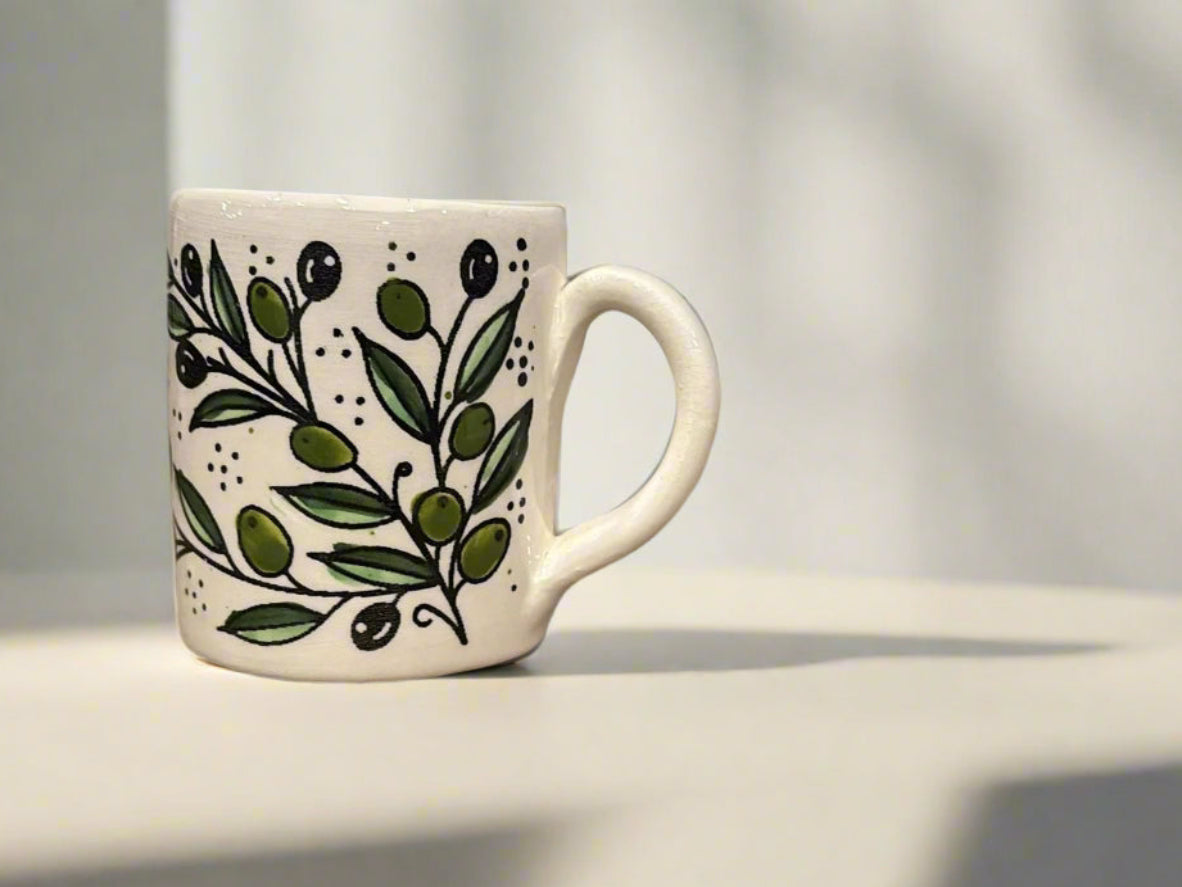
Turn a mug sideways and the handle can look like a flourish. Pick it up full and it becomes the entire argument. The loop decides where your fingers sit, how your wrist balances the weight, and whether taking a sip feels natural or faintly negotiated.
There is no universally correct handle. One person hooks a single finger through and rests a thumb on top. Another wants room for two fingers. Some people cradle the body and barely use the handle at all. A handle that looks generous can still pinch at its narrowest point; a delicate one can be surprisingly comfortable in the right hand.
The useful test is specific. With a safely filled mug, notice whether your knuckles press against the body. Notice whether the cup wants to tip away from you. Can you put it down gently without changing your grip? Does it still feel manageable at the end of a long pour? An empty mug on a shop shelf only tells part of the story.
Our position: choose the grip before the glaze. You are going to repeat this movement hundreds of times. A small compromise in the hand becomes a very familiar compromise. Beauty matters, but comfort should have the final word.
Make the case
Make the case: one finger, two fingers, or both hands around the cup?